How To Move a Gargen Shed?
Moving a garden shed is one of the most challenging—and often underestimated—parts of a house move. Sheds are heavy, awkward to handle, and typically located in difficult-to-access garden spaces. In this expert guide, we explain how to safely move a garden shed, when it’s worth doing, what equipment you need, and when professional help is essential. Based on hundreds of London and UK removals, this advice will help you avoid costly mistakes.
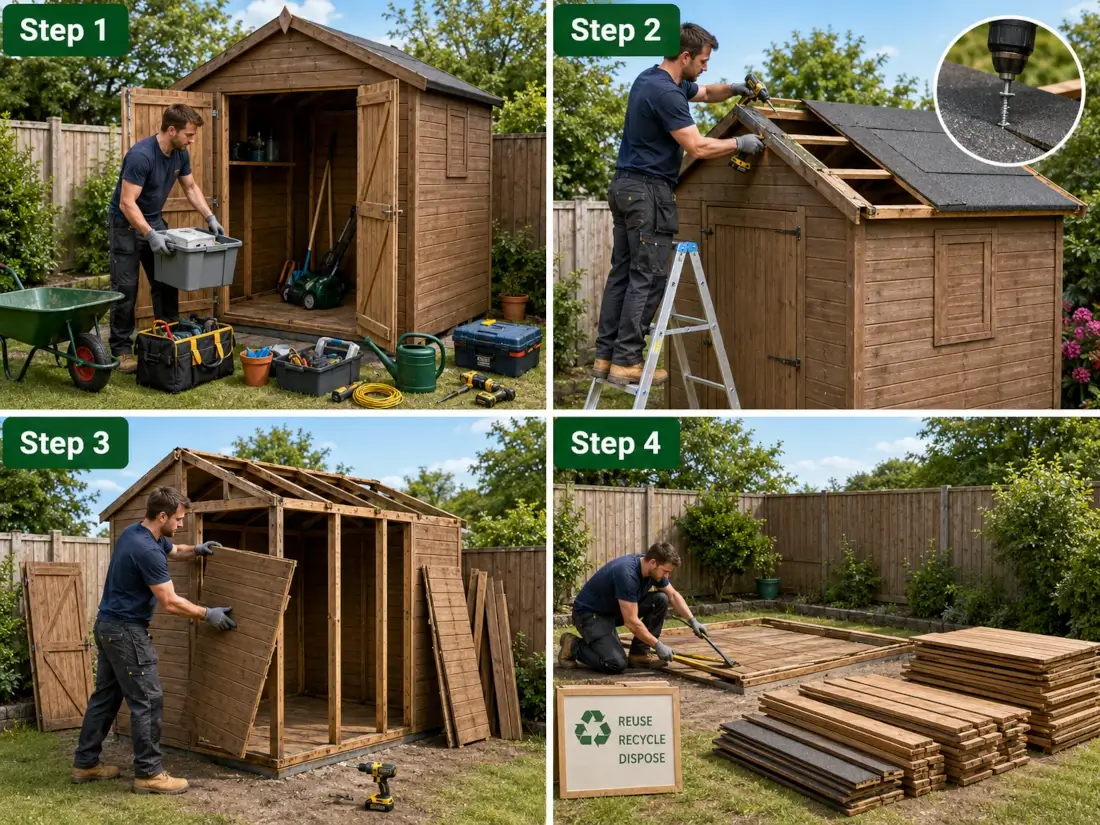
Table of contents
- Is It Worth Moving a Shed?
- What Affects Shed Moving Difficulty?
- Preparing Your Shed for Moving
- Main Options for Moving a Shed
- Tools and Equipment Needed
- Moving a Shed With Limited Access
- Do You Need Permission?
- Preparing the New Location
- Can You Move a Shed Yourself?
- When to Use Professional Help
- Frequently Asked Questions
Is It Worth Moving a Garden Shed?
Before investing time and money into moving a shed, honestly assess whether relocation makes financial and practical sense.
When Moving a Shed Is Worth It
Relocating your shed makes sense when:
- The structure is solid with no rot or decay
- It’s relatively new or custom-built with sentimental value
- The move is local or short-distance
- The shed fits the layout of your new garden
- The shed was expensive to purchase originally
In these cases, dismantling, transporting, and reassembling the shed is a practical, cost-effective solution.
When Replacing a Shed Is the Better Option
In many situations, buying a new shed is actually cheaper and easier:
- Timber shows signs of rot or warping
- Panels are already loose or damaged
- Access is severely restricted (impossible to dismantle sections)
- The shed won’t fit your new garden layout
- It’s an old, budget plastic shed with minimal value
- Transport and labour costs exceed replacement price
From our experience with hundreds of London moves, we often advise customers to remove and dispose of old sheds before the move. The money saved on transport and labour often exceeds the cost of a new, modern shed.
💡 Movivan Removals Tip: Hiring a house removals company in London, like Movivan, to move your garden shed can be cheaper than doing it yourself. Are all efforts, the time, the tools and renting a van worth it?
What Affects the Difficulty of Moving a Garden Shed?
Every shed presents unique challenges. Understanding these factors helps you plan realistically.
Size, Weight, and Construction Type
- Small plastic sheds (6×4 feet) are lighter and easier to dismantle
- Large timber sheds (12×10 feet or larger) can weigh several hundred kilos when assembled
- Tongue-and-groove construction is stronger but significantly heavier than overlap sheds
- Metal sheds are lighter but require careful handling to prevent rust and dents
Foundation Type
- Concrete slab bases mean the shed must be fully dismantled (the slab stays)
- Timber bases may be moved as a unit with the structure
- Fixed or bolted bases require additional labour and time to disconnect
Garden Access
This is often the biggest challenge we encounter in London and suburban areas:
- Narrow side passages or alleyways
- Steps leading to the garden
- Raised garden levels with no rear access
- No access at all (terraced houses with fenced gardens)
- Shared alleyways with strict usage agreements
- Fences or extensions blocking direct routes
Poor access often determines whether a shed can be moved at all. If the dismantled panels cannot physically exit the property, professional removal and disposal may be your only option.
Preparing Your Shed for Moving
Proper preparation is essential for a safe, damage-free move.
Empty the Shed Completely
- Remove all contents and shelves
- Clear hooks, brackets, and internal fixings
- Reduce internal weight as much as possible
- Dispose of unwanted items (great decluttering opportunity)
Reinforce the Structure
This critical step prevents panels from flexing or splitting during transport:
- Brace doors and windows internally with timber supports
- Add temporary cross-bracing across long wall sections
- Secure loose panels with additional screws (temporary only)
- Inspect for pre-existing damage before moving begins
Disconnect All Utilities
If your shed has utilities:
- Electricity: Switch off at the breaker and disconnect safely (hire a qualified electrician if needed)
- Water supply: Turn off the water, drain all pipes
- Lighting: Remove fixtures or disable circuits
Never move a shed with active utilities connected. This is a safety hazard and will damage equipment during transport.
How to Move a Garden Shed: Your Main Options
There are three realistic approaches to moving a shed:
Moving Without Dismantling
This approach is rarely practical and carries high risks:
- Suitable only for very small sheds with clear, straight access
- Requires specialist lifting equipment (forklifts, heavy-duty dollies)
- High risk of structural twisting and damage
- Can cause damage to surrounding property (fences, paving, landscaping)
This method is generally not recommended unless the shed is extremely small and access is completely clear. Even if the garden shed is small, we still advise hiring our moving help, even if it is only a man with a van service.
Dismantling and Reassembling (Most Common)
This is the safest and most practical method for most situations:
- Roof removed first to reduce weight and improve access to fixings
- Panels taken down methodically in sequence, one at a time
- All fixings and hardware labelled and stored safely in sealed bags
- Components protected with blankets during transport
- Reassembled systematically at the new location
This method takes longer but produces the best results. Most sheds are designed to be dismantled, though care is required to avoid splitting timber panels.
Professional Shed Moving Services
For larger sheds, restricted access, or moves that are part of a house relocation, professional help offers:
- Experienced, trained teams familiar with shed dismantling
- Proper equipment (dollies, lifting straps, protective blankets)
- Insurance coverage protecting your property and the shed
- Significantly lower cost when included with house removals
- Guarantee that the shed arrives damage-free
Check also: Important things to measure when moving guide
Tools and Equipment Needed to Move a Shed
Essential Tools for Dismantling
- Screwdriver set (both Phillips and flat-head)
- Power drill with mixed bits
- Pry bar or crowbar for gentle panel separation
- Hammer for gentle tapping
- Adjustable spanners for bolted connections
- Tape measure for accurate planning
- Safety gloves (heavy-duty work gloves)
- Eye protection (safety glasses)
Equipment for Lifting and Transport
- Furniture dollies with wheels for moving panels
- Lifting straps or harnesses for safe handling
- Timber bearers/supports for protecting panels during loading
- Moving blankets for wrapping components
- Dust sheets for protecting surrounding areas
- Labels and markers for identifying components
- Sealed bags or containers for storing fixings and hardware
Many DIY shed moves fail simply because the proper equipment isn’t available. Without dollies and lifting straps, you risk serious injury and property damage.
Moving a Shed With Limited or No Access
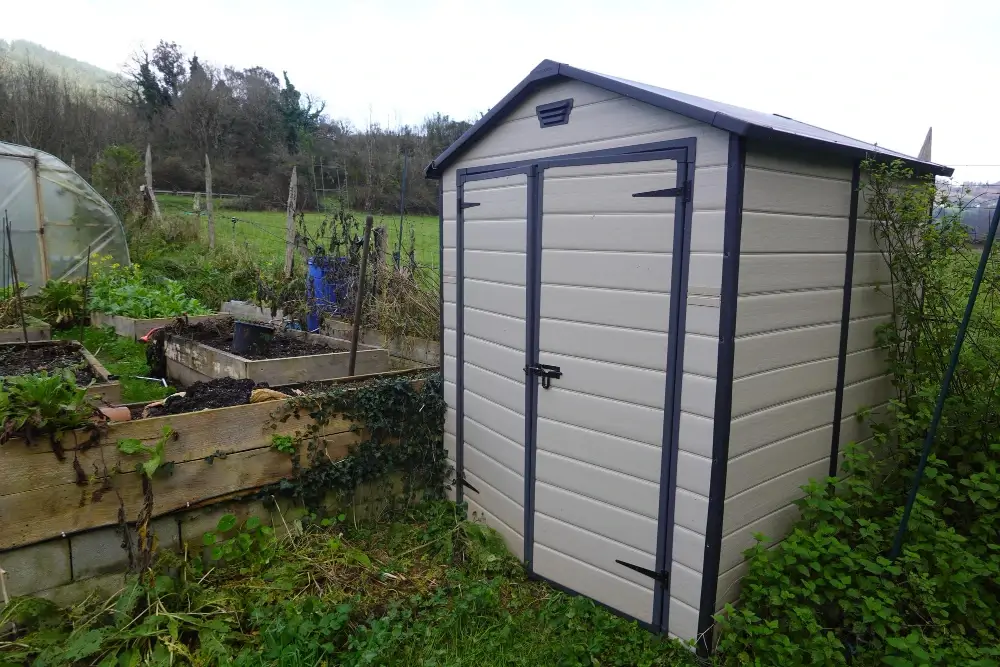
This is one of the most common problems in London properties. If your shed:
- Cannot fit through existing doors or passages
- Has no side or rear access to the garden
- Is blocked by extensions, fences, or neighbouring boundaries
- Is in a terraced house with a completely enclosed garden
Then full dismantling is mandatory. Even dismantled panels may be impossible to safely remove without breaking windows, fences, or causing structural damage to the property.
What to Do With Inaccessible Sheds
When access is genuinely impossible:
- Professional removal and disposal may be your only option
- Specialist contractors with cranes can sometimes lift sheds over buildings
- Cost-benefit analysis: Compare removal costs vs. replacement expense
We often recommend that customers in this situation dispose of the shed and purchase a new one for their new home—it’s frequently cheaper and less stressful.
Do You Need Permission to Move a Garden Shed?
Planning Permission
In most cases, planning permission is NOT required to move a shed within your garden. However, restrictions may apply if:
- The shed is unusually large (over 4 × 3 metres)
- The new position is very close to the property boundaries
- Your property is listed or in a conservation area
- Local council-specific bylaws apply in your area
When moving to a new property, check with the new local authority’s planning department if you’re unsure. A quick phone call can clarify requirements.
Transport and Road Access
For moves involving vans or loading from the street:
- Parking restrictions may apply in your area
- Permits could be required for extended vehicle parking
- Narrow roads need careful planning for large vehicle access
- London boroughs often have strict street parking rules
Contact your local council or moving company to confirm any restrictions before the move date.
Preparing the New Location for Your Shed
Choose the Right Foundation
Never place a shed directly on soil or grass. Suitable bases include:
- Concrete slab: Most durable; should be 4 inches thick
- Paving slabs: Quick to install; good for drainage
- Pressure-treated timber base: Rustic look; requires maintenance
- Gravel pad: Budget-friendly; less durable long-term
Ensure Level Ground and Proper Drainage
An uneven foundation causes:
- Doors that stick or won’t close
- Stress on the structure and accelerated ageing
- Water pooling inside the shed during heavy rain
- Shortened lifespan of the shed (wood rot, rust)
Use a spirit level to check the foundation before installing the shed. Proper drainage around the base (sloped ground away from the shed) is equally important.
Can You Move a Garden Shed Yourself?
It’s technically possible to move a shed as a DIY project, but there are significant risks:
Risks of DIY Shed Moving
- Personal injury: Back injuries, crushed fingers, falling components
- Property damage: Dents, scratches, split panels, broken windows
- Structural damage: Warped panels that won’t fit together on reassembly
- Damage to surroundings: Fence damage, paving cracks, landscaping destruction
- Wasted time and stress if things go wrong mid-move
Financial Reality
Many homeowners are surprised to discover that adding shed dismantling to a professional house move often costs less than renting equipment and a van separately.
Consider:
- Van rental: £40–60 per day
- Equipment rental (dollies, straps): £30–50
- Your time and labour (full day or more)
- Risk of damage or injury
Professional movers often quote £400–800 for shed dismantling and reassembly as part of a house move—which frequently works out cheaper than DIY when you factor in all costs.
When to Use Professional Help to Move a Shed
Professional help is strongly recommended when:
- The shed is large or heavy (8×10 feet or larger)
- Access is restricted or problematic
- The move is part of a house relocation
- You’re concerned about safety risks
- The shed has special construction (double-thickness walls, heavy roof)
- You want insurance protection for your belongings
Professional removers:
- Have experience dismantling hundreds of sheds
- Understand structural stresses and how to avoid damage
- Have proper equipment and insurance
- Can complete the job safely and efficiently
- Provide peace of mind that nothing will be damaged
Frequently Asked Questions
Q: What is the biggest cause of shed damage during transport?
Structural twisting caused by lifting panels without proper bracing. This is why sheds should be fully dismantled in sequence and reinforced before any movement. Lifting an entire shed without disassembly can permanently warp the frame.
Q: Can a shed on a fixed concrete base be moved?
Yes, but the concrete base cannot be moved—it stays at the original property. The shed structure must be fully dismantled. A new concrete base must be prepared at the destination before reassembly.
Q: How do professionals prevent timber panels from splitting during reassembly?
Experienced movers pre-drill all fixing points, reuse original fixings where possible, and carefully avoid over-tightening screws (a common cause of splitting). Modern panels are designed to be dismantled if done correctly.
Q: How long does it take to move a garden shed?
A small to medium shed (8×6 feet) typically takes 4–8 hours to dismantle, transport, and reassemble. Large sheds can take 12+ hours. Professional teams working together complete the job faster than DIY attempts.
Q: What’s the difference between overlap and tongue-and-groove sheds?
Overlap sheds have panels that overlap like roof tiles (lighter and easier to dismantle). Tongue-and-groove sheds have interlocking panels (stronger but heavier and more complex to dismantle). T&G sheds require more expertise to move.
Q: Can metal sheds be moved as easily as timber sheds?
Metal sheds are lighter but require careful handling to prevent rust, dents, and loss of small bolts. All fasteners should be labelled and stored safely. Rust prevention during transport is important.
Need Help Moving Your Garden Shed?
Whether your shed is large, difficult to access, or part of a complete house move, Movivan Removals has the expertise and equipment to dismantle, transport, and reassemble it safely. With hundreds of successful shed relocations across London and the UK, we know exactly how to handle your unique situation.