Gym Equipment Moving Tips
by Movivan | Created Jan 2024 | Updated May 2026
Moving gym equipment is fundamentally different from relocating standard furniture. Whether it’s part of home removals services or the relocation of a commercial fitness facility, the process requires specialized knowledge, proper equipment, and careful planning. In this comprehensive guide, we explain how to move gym equipment safely, the costs involved, when to hire professional gym equipment movers in London, and how to avoid damage, injury, and costly mistakes.
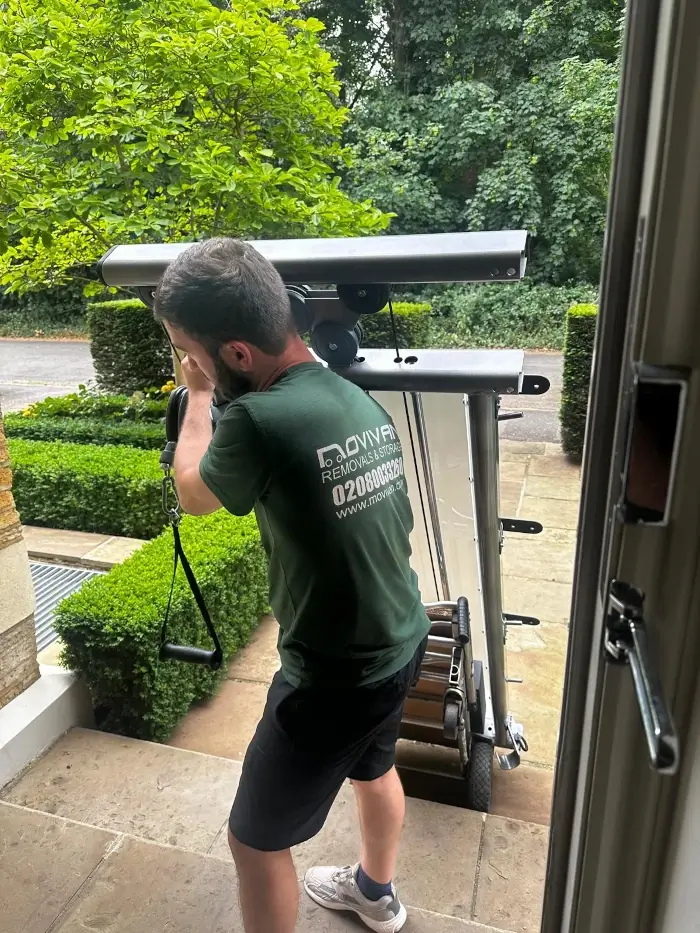
Table of contents
- Why Gym Equipment Is Different from Regular Furniture
- Home Gym vs Commercial Gym Equipment – Key Differences
- How to Prepare: Essential Pre-Moving Steps
- Tools and Equipment Needed for Safe Gym Moves
- How to Dismantle Gym Equipment Properly
- Safe Transport Methods for Fitness Machines
- Moving Weights, Dumbbells and Free Weights
- Common Problems and How to Avoid Them
- DIY vs Professional Gym Equipment Moving
- How Much Does Gym Equipment Moving Cost?
- FAQs About Moving Gym Equipment
Why Gym Equipment Is Different from Regular Furniture
Understanding the Unique Challenges of Fitness Equipment
Gym equipment presents a completely different moving challenge compared to standard household furniture. These machines are specifically engineered to be heavy, stable, and resistant to wear — qualities that make them valuable but also difficult to move. A typical treadmill weighs 100–150kg, while multi-gym machines can exceed 300kg. This extreme weight concentration, combined with awkward dimensions and sensitive internal components, requires specialized handling techniques.
Common Damage Risks with Fitness Equipment
The internal complexity of modern gym equipment makes it vulnerable during transport. Most fitness machines contain electronic components, motors, pulleys, cables, and precise mechanical joints. Even minor impacts or tilting can cause:
- Motor damage or malfunction
- Broken screens or display panels
- Damaged cables or pulley systems
- Bent or warped frames
- Scratched painted surfaces and chrome parts
- Misaligned safety mechanisms
When machines are damaged during moving, repairs can cost hundreds or thousands of pounds — often more than professional moving services would have cost.
⚠️ Important: Many gym equipment warranties explicitly void coverage if machines are moved improperly or transported by untrained personnel. Professional movers ensure your warranty remains valid while protecting your investment.
Check also: How to move heavy furniture.
Home Gym vs Commercial Gym Equipment – Key Differences
Moving a Home Gym Setup
Home gyms typically include smaller machines like treadmills, exercise bikes, rowing machines, weight benches, dumbbells, and multi-purpose gym systems. These items are frequently relocated as part of house removals services and generally fit through standard doorways when dismantled.
Home gym moves are simpler but still require:
- Proper measurement of access points
- Careful handling of electronic components
- Protection against scratches and dents
- Safe negotiation of stairs when present
Moving Commercial Fitness Facility Equipment
Commercial gym moves are significantly more complex. These involve larger machines like cable systems, leg presses, Smith machines, plate-loaded equipment, and multiple cardio units. Commercial facilities often have:
- Dozens or hundreds of pieces of equipment
- Heavy-duty machines that cannot be easily dismantled
- Strict access requirements and building regulations
- Need for coordination with facility management
- Requirements for specialist insurance and licensing
Commercial gym relocations require careful project planning, inventory management, and access coordination — typically handled only by specialist removals teams with commercial expertise.
How to Prepare: Essential Pre-Moving Steps
Take Accurate Measurements of All Access Points
Before moving a single piece of equipment, measure every access point at both the original and new locations. This includes:
- Doorways: Record width and height; note door swing direction
- Hallways and corridors: Measure at the narrowest point
- Staircases: Measure width and record the number of turns
- Lifts: Measure internal dimensions and load capacity
- Ground floor: Measure space for placement and maneuvering room
A treadmill might be 70cm wide but its handles could extend further. A rower might fit through a doorway lengthwise but not sideways. Early measurement prevents on-the-day surprises that could lead to delays, damage, or inability to complete the move.
Obtain and Review Manufacturer Documentation
Before dismantling any equipment, locate the manufacturer’s manual or instructions. Many fitness machines have specific dismantling procedures that must be followed to:
- Prevent damage to critical components
- Maintain electrical safety during transport
- Ensure proper reassembly at the new location
- Preserve warranty coverage
Some machines should never be tilted beyond a certain angle, while others require electrical isolation before dismantling. Electronic treadmills and machines with lubrication systems need special care to prevent damage.
Create a Detailed Inventory and Moving Plan
List every piece of equipment, its weight, dimensions, and any special handling requirements. A proper moving plan ensures:
- Nothing gets left behind
- Equipment is loaded in the correct order
- Heavy items are moved first or last to minimise time on site
- Complex machines are given adequate time for careful handling
This is especially important for temporary storage situations where equipment will be stored before the final destination.
Related reading: Learn more about important things to measure when moving.
Tools and Equipment Needed for Safe Gym Moves
Essential Hand Tools for Dismantling
Professional gym equipment moving requires proper tools to avoid stripping bolts or breaking parts. Essential tools include:
- Socket sets and wrenches: Multiple sizes to fit different bolts
- Screwdriver sets: Both Phillips and flathead, various sizes
- Pliers and grips: For holding and manipulating components
- Hex keys (Allen keys): Common on modern fitness equipment
- Rubber mallets: For gentle tapping without damage
- Lubricating oil: For stuck bolts and mechanical joints
Using the wrong size tool or forcing a bolt can strip it completely, requiring expensive replacement parts.
Lifting and Transport Equipment
Attempting to carry heavy gym equipment by hand is dangerous and increases the risk. Professional moving requires:
- Heavy-duty dollies: Rated for 300kg+ loads with smooth-rolling wheels
- Furniture sliders: For moving machines across floors without lifting
- Lifting straps and harnesses: Distribute weight evenly and reduce strain
- Hydraulic jacks or equipment lifts: For moving very heavy machines
- Ramps and slide sheets: For safe vehicle loading and unloading
- Stair climbers or appliance dollies: Specialised equipment designed for stairs
Protective Materials for Equipment Safety
Equipment protection prevents damage and maintains appearance. Essential materials include:
- Moving blankets: Thick, padded blankets that wrap around machines
- Bubble wrap: For fragile components like screens and joints
- Cardboard corners: Protect edges from impacts
- Packing tape: Heavy-duty tape for securing protective wrapping
- Floor protection: Plywood or plastic sheets to protect the flooring from equipment
Movivan provides comprehensive packing services, protecting all items with professional-grade materials.
How to Dismantle Gym Equipment Properly
Which Equipment Should Be Dismantled
Not all gym equipment needs to be taken apart, but many items benefit from careful dismantling:
Usually dismantled:
- Treadmills (console and incline mechanism removed)
- Exercise bikes (pedals, seat, and handlebars removed)
- Rowing machines (handles and footrest adjusted)
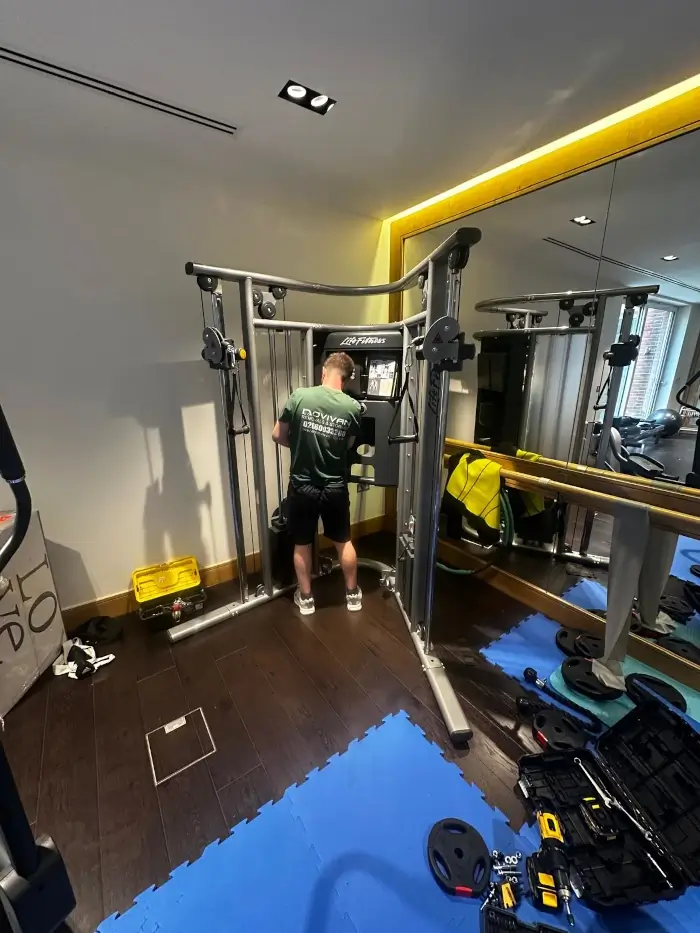
- Multi-gym machines (arms and pulleys often adjustable)
Rarely dismantled:
- Heavy plate-loaded machines (can be extremely difficult to disassemble)
- Squat racks (permanently welded frames)
- Fixed cable systems
Dismantling decisions depend on weight, dimensions, access constraints, and manufacturer recommendations. When in doubt, consult the equipment manual or a professional mover.
Step-by-Step Dismantling Process
Before starting:
- Unplug electrical equipment
- Take photos of the machine (for reassembly reference)
- Lay out all tools and materials
During dismantling:
- Remove accessories first (handles, seats, pedals, pins)
- Document each step with photos or notes
- Remove bolts or fasteners gradually, not all at once
- Be careful of pinch points and sharp edges
- Watch for springs that could release suddenly
After dismantling:
- Place all fasteners in clearly labelled bags
- Group related components together
- Wrap parts in protective materials
- Create an assembly reference guide
Labelling and Organisation System
A proper labelling system is crucial for successful reassembly. Use:
- Numbered bags: Bag 1, Bag 2, etc., corresponding to assembly steps
- Descriptive labels: “Treadmill console bolts,” “Bike pedal assembly,” etc.
- Inventory sheets: List contents of each bag
- Digital photos: Take photos of each stage of disassembly
- Reassembly checklist: Create a step-by-step reassembly guide
This level of organisation prevents lost parts and makes reassembly significantly faster and more accurate.
💡 Pro Tip: Consider hiring professional movers to handle dismantling for expensive or complex equipment. The cost is usually far less than the risk of damage or loss of components during a DIY attempt.
Related reading: Learn more about house moving mistakes to avoid.
Safe Transport Methods for Fitness Machines
Preparing Equipment for Vehicle Transport
Once dismantled and protected, equipment must be loaded strategically into the moving vehicle:
- Place heavy items first: Load treadmills and large machines on the vehicle floor
- Distribute weight evenly: Don’t overload one side of the vehicle
- Secure with straps: Use heavy-duty ratchet straps to prevent shifting
- Protect with blankets: Separate items with moving blankets to prevent contact damage
- Fill gaps: Use smaller items or padding to prevent movement during transport
Choosing the Right Vehicle
The vehicle type significantly affects safety and efficiency:
For home gym equipment:
- Large vans (3.5+ tonne capacity) with sufficient floor space
- Internal dimensions of at least 2.5m long, 1.9m wide, 1.8m high
- Lifting capability if equipment is heavy
For commercial gym equipment:
- Removal lorries with tail lift capacity
- Multiple journeys if equipment cannot fit in one load
- Climate control for sensitive electronic equipment
Choosing an inadequately sized vehicle can result in equipment not fitting, improper loading, and increased risk of damage during transport. It is best to contact us and schedule a home survey so we can provide you with the best advice. Without knowing what needs to be done, you might end up with the wrong price and service.
Protecting Property During Loading
Heavy gym equipment can easily damage floors, door frames, and walls. Protection methods include:
- Floor protection sheets: Plastic or cardboard laid on floors and in doorways
- Corner guards: Foam or cardboard protection at tight corners
- Door frame protection: Padding around door openings
- Furniture sliders: Special slides that go under equipment to minimize friction and protect floors
Professional movers carry these protective materials and know how to use them effectively.
Moving Weights, Dumbbells and Free Weights
Why Weights Require Special Packing
Free weights — dumbbells, kettlebells, barbells, and weight plates — present unique challenges due to their high density and concentrated weight. A single 20kg dumbbell is smaller than a loaf of bread but weighs as much as a small child. This extreme weight-to-size ratio means:
- Boxes can break under the weight if not reinforced
- The risk of a back injury is extremely high when lifting
- Dropping weights can cause serious injury or property damage
- Multiple smaller loads are safer than fewer large loads
Proper Weight Packing Methods
Use reinforced boxes or crates:
- Heavy-duty cardboard boxes with a thickness of at least 5mm
- Wooden crates for extremely heavy weights
- Maximum load per box: 20–25kg (not 50kg, even if the box is rated for it)
Organize weights strategically:
- Group similar weights together
- Pad between individual items to prevent clanging
- Use dividers or compartments within boxes
- Label weight denominations clearly on the outside
Distribute vehicle load properly:
- Calculate the total weight of all weights (can add up quickly)
- Ensure the vehicle is not overloaded
- Distribute weight across the vehicle floor, not stacked high
- Secure with straps to prevent the box from sliding
Managing Vehicle Weight Limits
A complete set of home gym weights can easily total 300–500kg. Most moving vans have maximum load capacities of 2000–3000kg, but this includes the vehicle’s empty weight. A practical carrying capacity is typically 1000–1500kg. With heavy gym equipment, this can be consumed quickly:
- Treadmill: 80–150kg
- Multi-gym machine: 150–300kg
- Weight plates (complete set): 300–500kg
- Total for complete home gym: 600–1000kg+
Overloading a vehicle compromises braking, steering, and tyre safety. Professional moving quotes account for these weight limits and recommend appropriate vehicle capacity.
Related reading: Learn more about how to label moving boxes.
Common Problems and How to Avoid Them
Problem 1: Equipment Won’t Fit Through Access Points
This is the most common gym equipment moving problem. A treadmill might measure 70cm wide but could be too wide when you try to navigate it through a hallway, around a corner, or up stairs.
How to avoid it:
- Measure all access points before moving day
- Dismantle equipment if necessary
- Consider alternative routes (balconies, windows, exterior access)
- Consult with professional movers about viability before committing
Problem 2: Lifts Being Out of Service
Moving gym equipment into upper-floor apartments is much more difficult without a working lift. Carrying a 150kg treadmill up multiple flights of stairs is extremely difficult, time-consuming, and dangerous.
How to avoid it:
- Check lift status before booking the move
- Confirm with building management that lifts will be available
- Book a day and time when lifts are guaranteed to be operational
- Allow extra time if stairs must be used as an alternative
Problem 3: Floor Load Limits in Flats and Offices
Some residential buildings and commercial spaces have weight restrictions for floors. Heavy gym equipment can exceed safe floor load limits, risking structural damage and safety issues.
How to avoid it:
- Check your building’s floor load specifications
- Distribute heavy equipment across multiple areas if needed
- Use flooring protection under very heavy machines
- Confirm with building management before delivery
Problem 4: Electronic Equipment Damage
Treadmills, exercise bikes, and electronic multi-gyms are sensitive to movement, impacts, and environmental changes. Transport damage can render expensive equipment non-functional.
How to avoid it:
- Protect electronic components during transport
- Avoid extreme temperature exposure
- Transport on flat, stable ground (avoid bumpy routes)
- Use professional movers with insurance coverage
For more common moving problems, see our guide on moving home issues.
DIY vs Professional Gym Equipment Moving
When DIY Gym Moving Might Work
DIY gym equipment moving could potentially work if:
- You have only 1–2 lightweight pieces (under 100kg each)
- Both locations have ground-floor, easy access
- No stairs or narrow hallways are involved
- You have proper lifting equipment available
- You have experienced helpers available
Even under ideal conditions, DIY moving carries significant risks of injury, damage, and warranty voidance.
Why Professional Movers Are the Safer Option
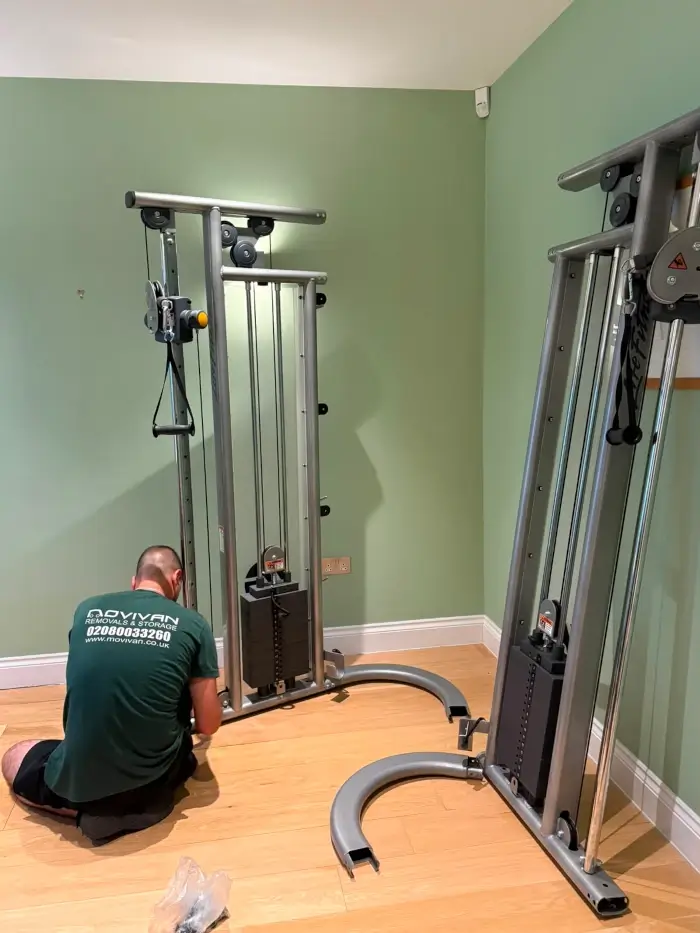
Professional gym equipment movers bring several advantages:
- Experience: Trained staff know how to handle each equipment type safely
- Proper equipment: Industrial-grade tools and lifting equipment
- Insurance: Full coverage for damage during transport
- Efficiency: Professional moves are faster with less risk
- Warranty protection: Professional handling maintains equipment warranties
- Peace of mind: You can focus on other aspects of your move
Cost-Benefit Analysis
Consider what could happen with DIY moving:
- Back injury: Could cost thousands in medical treatment and lost time
- Equipment damage: Could cost hundreds to thousands in repairs or replacement
- Property damage: Damaged floors, walls, or doorways can be expensive to repair
- Dropped equipment: Safety risk to yourself and anyone nearby
Professional moving typically costs £150–£400 for a home gym. A single injury or equipment damage claim could cost 10–100 times more.
⚠️ Important: Many gym equipment manufacturers specify in their warranty that damage from improper moving or non-professional transport voids coverage. Using professional movers is the only way to ensure warranty protection.
How Much Does Gym Equipment Moving Cost?
Typical Costs for Home Gym Equipment Moves
The cost to move home gym equipment depends on several factors:
Simple moves (ground floor, easy access): £150–£250
Moderate complexity (some stairs, narrow spaces): £250–£400
Complex moves (multiple flights, tight access): £400–£600+
These estimates assume a home gym with 3–5 pieces of equipment and transport distance up to 50 miles within London or the South East.
Factors Affecting Gym Equipment Moving Costs
1. Number and weight of items
- More equipment = more handling time and vehicle capacity needed
- Heavier items require more movers and specialist equipment
2. Access complexity
- Ground floor access: Lower cost
- One flight of stairs: +£50–£100
- Multiple flights: +£100–£200+
- Narrow hallways/tight corners: +£50–£150
3. Distance traveled
- Local London moves: Base rate
- South East moves (30–50 miles): +£50–£150
- Long-distance moves (100+ miles): Significantly higher based on fuel and crew time
4. Dismantling and reassembly
- Basic dismantling: Usually included
- Complex reassembly: May incur additional charges
- Professional reassembly recommended for expensive equipment
Commercial Gym Equipment Moving Costs
Commercial gym relocations are significantly more expensive due to:
- Much larger equipment and higher total weight
- Multiple machines requiring coordination
- Longer transport distances (to new facility locations)
- Need for specialist commercial equipment and crews
- Facility downtime considerations
Commercial gym moves typically require detailed site surveys and custom quotes ranging from £1,500–£5,000+ depending on facility size and complexity.
Getting Accurate Quotes
To get an accurate quote, provide:
- Complete list of equipment with brand and model numbers
- Weights and dimensions of major items
- Current location and new location details
- Building access information (lifts, stairs, floor load limits)
- Whether dismantling and reassembly are required
Movivan provides free, no-obligation quotes after a brief consultation about your equipment.
Related reading: Learn more about How much does it cost to move a safe?
FAQs About Moving Gym Equipment
Q: Can standard removal companies move gym equipment?
Not all removal companies have experience with gym equipment. Standard removals companies may lack the specialist knowledge, equipment, and insurance required for heavy fitness machines. Always confirm that your moving company has specific experience moving gym equipment before booking.
Q: What’s the safest way to move a treadmill?
The safest method involves: (1) unplugging the treadmill, (2) removing detachable parts if possible, (3) securing it on a heavy-duty dolly, (4) protecting it with moving blankets, (5) using lifting straps when moving to/from the vehicle, and (6) transporting on stable, level ground. Professional movers have specialised equipment, such as treadmill dollies, designed for this purpose.
Q: Do I need insurance when moving gym equipment?
Yes, insurance is highly recommended. Professional moving companies provide liability insurance covering damage during transport. Your homeowner’s insurance may also cover moving damage, but it’s important to check your policy details. Confirm insurance coverage before the move begins.
Q: How long does it take to move a home gym?
For a typical home gym with 3–5 pieces of equipment, expect 2–4 hours, including dismantling, packing, transport, and basic positioning at the new location. Complex access situations or reassembly could extend this to 6+ hours. Professional movers provide time estimates during the quote process.
Q: Can gym equipment be stored temporarily?
Yes, gym equipment can be safely stored. Movivan provides secure, climate-controlled storage solutions suitable for electronics and mechanical equipment. Temporary storage is useful when moving into a new home before permanent space is ready, or during renovations. Storage facilities have floor protection and climate control to keep equipment safe.
Q: Will moving damage my treadmill warranty?
Many manufacturers specify that improper moving or transport by untrained personnel voids warranty coverage. Professional movers reduce this risk significantly. Always check your equipment’s warranty documentation before the move, and keep proof of professional moving as documentation.
Q: What’s the best way to move weights and dumbbells?
Weights should be packed in reinforced boxes with a maximum load of 20–25kg per box, not the box’s rated capacity. Use padded dividers to prevent clanging. Distribute weight boxes across the vehicle floor rather than stacking them high. Label boxes clearly with weight denominations for easy unloading and organisation at the new location.
Q: How should I prepare my equipment for the move?
Preparation steps include: (1) unplugging electronic equipment, (2) removing loose or detachable parts, (3) measuring all access points, (4) obtaining manufacturer manuals, (5) taking photos for reassembly reference, (6) checking building regulations for floor loads, and (7) confirming with the moving company about any special handling requirements.
Q: Can you move gym equipment upstairs?
Yes, but it’s challenging and requires specialised equipment. Heavy machines may need to be partially dismantled. Stair climber dollies or appliance dollies are designed for this purpose. Stairs significantly increase moving time and cost. Professional movers can assess whether stair movement is feasible for your specific equipment and location.
When to Hire Professional Gym Equipment Movers
Why Gym Equipment Moving Requires Expertise
Gym equipment is one of the most challenging items to move safely. The combination of extreme weight, complex mechanics, sensitive electronics, and awkward dimensions makes professional expertise essential for:
- Protecting expensive equipment from damage
- Ensuring the safety of the people involved in the move
- Maintaining warranty coverage through proper handling
- Completing the move efficiently and on schedule
- Providing liability coverage and peace of mind
Movivan’s Professional Gym Equipment Moving Services
Movivan Removals specialises in moving all types of fitness equipment, from home gyms to commercial facilities. Our services include:
- Expert assessment and detailed moving plans
- Professional dismantling of complex machines
- Specialist lifting and transport equipment
- Protective wrapping and padding materials
- Safe handling of heavy weights and plates
- Professional reassembly at your new location
- Full liability insurance coverage
- Temporary storage if needed during your move
We’ve moved many fitness machines across London and the UK, understanding the unique requirements of each equipment type.
Need Help Moving Your Gym Equipment?
Professional gym equipment movers make all the difference. Movivan combines experience, specialist equipment, and full insurance coverage to move your fitness machines safely and efficiently. Whether you’re relocating a home gym or an entire commercial facility, we handle it with expert care.
Contact us today for a free, no-obligation quote and move with confidence.
Email: office@movivanremovals.co.uk
Tel: 020800 33260