Moving to a Smaller House: 12 Practical Downsizing Tips
Moving to a smaller house is easier when you reduce your belongings, measure the new property and decide what will fit before you start packing. Planning these things early can save money, prevent moving unnecessary items and make moving day much simpler.
A smaller home can mean lower bills, less cleaning and a more manageable living space. However, it can also mean less storage, smaller rooms and difficult decisions about furniture and belongings you have collected over the years.
The key is not simply to move everything and work it out afterwards. A successful downsize starts before the removal van arrives.
Here are 12 practical tips to help you move into a smaller home without taking more than you need.
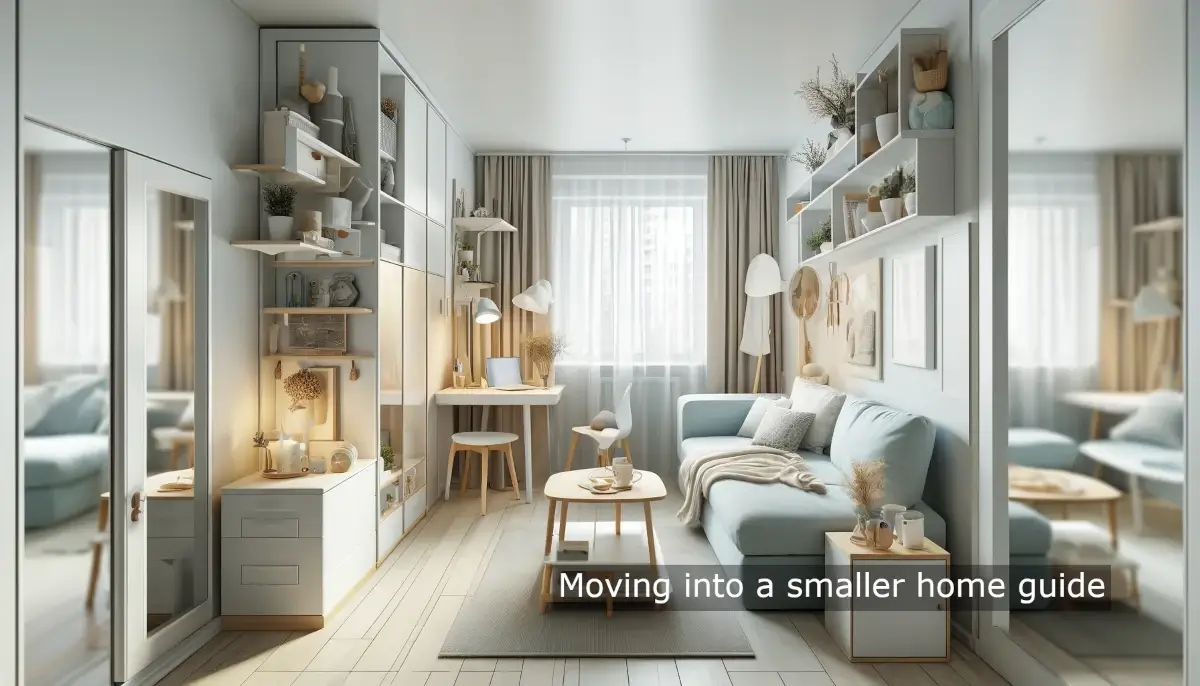
Table of Contents
- Start Downsizing Before You Start Packing
- Measure Your New Home Before Deciding What to Take
- Measure Your Furniture and Appliances
- Check Whether Furniture Can Actually Reach the Room
- Decide What Is Actually Worth Taking
- Sell, Donate, Recycle or Dispose of Unwanted Items
- Take Your Time With Sentimental Belongings
- Create a Floor Plan Before Moving Day
- Choose Furniture That Works in a Smaller Space
- Use the Available Storage Space More Efficiently
- Decide Whether You Need a Storage Unit
- Plan Your Removal Around the Smaller Property
- Moving to a Smaller Home in London
- Should You Use Storage When Downsizing?
- Frequently Asked Questions About Moving to a Smaller House
1. Start Downsizing Before You Start Packing
Start downsizing several weeks before your move rather than trying to sort everything while packing. The earlier you decide what is coming with you, the less you will need to pack, transport and unpack.
Go through your home one room at a time rather than trying to tackle everything in a weekend.
Create five simple categories:
- Keep
- Sell
- Donate
- Recycle
- Dispose
You do not need to make every decision immediately. If you are unsure about something, create a separate group and return to it later.
Try asking yourself four questions:
Do I regularly use this?
Will it fit in the new home?
Will I have somewhere sensible to store it?
Would replacing it later cost more than keeping or storing it?
These questions are often more useful than simply asking whether you like an item.
Starting early also gives you time to sell furniture, arrange donations or organise a house clearance in London if you have a large amount to remove.
2. Measure Your New Home Before Deciding What to Take
Measure the rooms in your new home before deciding which furniture and larger belongings to move. Knowing the available space stops you paying to transport furniture that will not fit comfortably once it arrives.
Measure the length and width of important rooms and note the position of:
- doors
- windows
- radiators
- built-in cupboards
- fireplaces
- alcoves
- electrical sockets
Do not compare room sizes based only on how they look during a viewing.
A room may appear large while empty but feel completely different once you add a sofa, dining table or large wardrobe.
If you have a floor plan from the estate agent or landlord, use it as a starting point. If possible, take your own measurements as well.
3. Measure Your Furniture and Appliances
Measure large furniture and appliances before moving them into a smaller property. Compare their width, height and depth with both the available room space and the access route into the property.
Items worth measuring include:
- sofas
- beds and bed frames
- wardrobes
- dining tables
- desks
- bookcases
- cabinets
- fridge freezers
- washing machines
- tumble dryers
A large sofa might technically fit inside your new living room but leave so little space around it that the room becomes difficult to use.
Write the measurements down rather than relying on memory.
If something clearly does not work in the new property, decide before moving day whether you will sell it, donate it, dispose of it or place it into storage.
You can also read our guide to important things to measure when moving house.
4. Check Whether Furniture Can Actually Reach the Room
Furniture needs to fit through the property as well as fit inside the room. Measure doors, hallways, stairs and lifts before assuming that a large item can be moved into your new home.
This is something that is easily overlooked when downsizing.
Check:
- front door width and height
- internal doors
- narrow hallways
- staircase width
- staircase turns and landings
- communal corridors
- lift dimensions
- ceiling height around stairs
- access from the street to the entrance
This is particularly important when moving from a house into a flat.
For example, a wardrobe may fit perfectly along a bedroom wall but be impossible to manoeuvre around a narrow staircase while assembled.
In some cases, furniture can be dismantled before transportation and rebuilt inside the new property.
Tell your removal company about any unusually large items before moving day so they can decide whether dismantling or special handling will be required.
5. Decide What Is Actually Worth Taking
Take belongings that have a clear purpose or value in your new home rather than automatically moving everything you currently own. A smaller property works best when the amount you own matches the amount of space available.
Start with the things you use regularly.
Then look at possessions that have gradually accumulated but rarely leave a cupboard, loft, garage or spare room.
Common examples include:
- duplicate kitchen equipment
- unused exercise equipment
- old electronics
- spare furniture
- books you no longer read
- clothes you rarely wear
- old paperwork
- decorative items with no planned place in the new home
Downsizing does not mean getting rid of everything you enjoy.
It means being more selective about what deserves space in your new home.
It can also reduce the cost of your move. The fewer belongings you have, the less packing material, labour and vehicle space may be required.
6. Sell, Donate, Recycle or Dispose of Unwanted Items
Unwanted belongings should be dealt with before moving day whenever possible. Selling, donating, recycling or responsibly disposing of them prevents unnecessary items from following you into a home where space is already limited.
Furniture and other items in good condition may be suitable for selling through online marketplaces.
You could also donate usable furniture, clothing, books and household items to charity.
Some belongings may be recyclable rather than suitable for resale.
Clearing your London home before you move will make the packing and unpacking process much easier and less stressful. Plus, you’ll start your new life in a smaller home with a clean slate.
7. Take Your Time With Sentimental Belongings
You do not need to get rid of sentimental belongings simply because you are downsizing. Instead, keep the pieces that matter most and find practical ways to reduce the amount of space memories occupy.
Sentimental items are usually the hardest part of downsizing.
Trying to make quick decisions about photographs, children’s belongings, inherited furniture or family possessions can make the process unnecessarily stressful.
Start these items earlier than ordinary household clutter.
You might decide to:
- keep a smaller selection of meaningful objects
- photograph bulky items before letting them go
- digitise photographs or documents
- give family possessions to relatives
- store important items that do not currently fit
- keep one representative item from a larger collection
There is no rule saying that everything needs to fit into a simple keep-or-discard system.
The aim is to create enough space for comfortable everyday living while preserving the things that genuinely matter to you.
8. Create a Floor Plan Before Moving Day
Create a simple furniture plan for your new home before the removal team arrives. Knowing where larger items are going makes unloading faster and prevents furniture from being placed in rooms where it does not belong.
You do not need specialist software.
Draw each room on paper and mark the approximate location of:
- beds
- wardrobes
- sofas
- tables
- cabinets
- desks
- large appliances
Use your measurements to check that enough walking space remains around the furniture.
You can then label your furniture and boxes by room.
For example:
BEDROOM 1
LIVING ROOM
KITCHEN
OFFICE
This makes it easier for the removal team to place items correctly the first time.
It also reduces the need to move heavy furniture around after the removal is complete.
9. Choose Furniture That Works in a Smaller Space
Smaller homes usually work better with furniture that fits the scale of the rooms rather than simply using the largest furniture that will physically fit. Multifunctional furniture can be particularly useful when space is limited.
Consider items such as:
- beds with storage underneath
- ottomans with internal storage
- extendable dining tables
- folding desks
- sofa beds
- nesting tables
- storage benches
Think about how frequently something will be used before buying it.
A dining table for eight people may not make sense if you normally use two seats and only occasionally entertain.
Furniture with visible floor space underneath can also make compact rooms feel less crowded.
If you need to reposition particularly large items, take care to avoid injury or damage. Our guide explains how to move heavy furniture.
10. Use the Available Storage Space More Efficiently
The best way to create more storage in a small home is to use overlooked areas such as vertical space, the area underneath furniture and the inside of cupboards. Good storage allows you to keep useful belongings without filling every visible surface.
Look upwards as well as outwards.
Tall shelving and cabinets can provide more storage without using additional floor space.
Other useful ideas include:
- under-bed storage
- wall-mounted shelves
- hooks behind doors
- built-in cupboards
- storage boxes that stack
- organisers inside wardrobes
- furniture with hidden storage
Avoid filling the new property with storage furniture immediately.
Live in the space first if possible and identify where additional storage is genuinely needed.
Good organisation can make a small home feel comfortable.
Too many storage units can have the opposite effect and make rooms feel even smaller.
11. Decide Whether You Need a Storage Unit
Renting a storage unit can be a practical solution when downsizing. You can use it temporarily during the move or for items you want to keep long term.
Temporary storage may help if:
- there is a gap between moving dates
- your new home is being renovated
- you have not decided what to keep
- you are waiting for furniture to be sold
- you want to unpack gradually
Long-term storage may be more suitable for:
- seasonal belongings
- family furniture
- collections
- valuable possessions
- equipment used occasionally
- items you may need in a future home
Before renting storage, think realistically about what each item is worth.
Keeping inexpensive furniture in paid storage for several years may eventually cost more than replacing it.
For belongings that are valuable, difficult to replace or important to you, storage can make much more sense.
Movivan provides storage options that can be combined with your removal if required.
12. Plan Your Removal Around the Smaller Property
If you are using our house moving services, it helps to know you are downsizing and to share details about the new property’s access before moving day. This lets the team plan the vehicle, loading order, furniture dismantling, and unloading more effectively.
Useful information includes:
- property type
- floor number
- whether there is a lift
- staircase access
- parking restrictions
- distance from parking to the entrance
- unusually narrow doors
- large or difficult furniture
- items going into storage
- furniture requiring dismantling
It is also helpful to separate belongings according to their final destination.
For example:
New home
Storage
Donation
Disposal
This reduces confusion while loading.
If some furniture must be dismantled, arrange this before or as part of your removal rather than discovering the problem while the van is being unloaded.
A professional home removal company in London can help you plan these details before the moving date.
💡 Related topic: Cheapest way to move home
Moving to a Smaller Home in London
Moving into a smaller London property often requires more planning because flats and older buildings can have restricted access, limited storage and tighter parking arrangements. Checking access and deciding what will fit before moving day can prevent delays and unnecessary costs.
Someone moving from a larger suburban house into a London flat may lose a garage, loft, garden shed or spare bedroom at the same time.
This makes decluttering especially important.
Access can also be more complicated.
London moves may involve:
- narrow communal corridors
- upper-floor flats
- small lifts
- tight staircases
- controlled parking zones
- loading restrictions
- long carrying distances between the van and property
If you are moving into a flat, find out whether the building has any specific moving rules.
Some developments require residents to reserve a lift or provide advance notice before a removal takes place.
Parking should also be checked before the moving date.
The nearest legal parking place is not always directly outside the property, and longer carrying distances can affect how long the removal takes.
Give your removal company the full address and access information in advance so these issues can be planned for.
Should You Use Storage When Downsizing?
Use storage when you have belongings worth keeping but do not have enough space for them in your new home. Storage is particularly useful when the move is temporary, your new property is not ready or you need more time to decide what should stay.
It should not automatically become a place for everything you could not decide about.
Before putting an item into long-term storage, consider:
How likely am I to use this again?
How difficult would it be to replace?
What is its financial or sentimental value?
How much will it cost to store?
For example, storing valuable family furniture may make sense.
Paying several years of storage fees for inexpensive flat-pack furniture may not.
Clearly label anything going into storage and keep a basic inventory.
This makes it much easier to find belongings later without opening every box.
Frequently Asked Questions About Moving to a Smaller House
Should I Move Everything First and Declutter Afterwards?
Usually, no. Moving everything first often means paying to pack and transport items that you later decide you do not have space for.
It is normally better to reduce your belongings before the move. However, if you are under time pressure or are unsure about valuable or sentimental items, temporary storage can give you extra time to decide without filling the new home.
What Should I Pack Separately When Downsizing?
Pack the things you will need immediately in the new home separately from items you can unpack later. This is especially useful when the new property has less space and you want to avoid opening every box at once.
A separate essentials box could include:
- toiletries
- medication
- chargers
- basic kitchen items
- kettle and drinks
- important documents
- cleaning products
- bedding
- a change of clothes
Keeping these items easy to access can make the first night much more comfortable.
Should I Buy New Furniture Before or After Moving?
In most cases, it is better to wait until you have moved before buying additional furniture. Living in the new property for a short time helps you understand how the rooms actually work and where extra furniture is genuinely needed.
Measurements are useful, but they do not always show how spacious or crowded a room will feel once you are living in it.
If you already know that an essential item will not fit, such as a bed or dining table, you can arrange a suitable replacement in advance.
How Can I Avoid Making My New Home Feel Overcrowded?
Avoid overcrowding by leaving some empty space instead of trying to fill every wall, cupboard and corner immediately. A smaller home usually feels more comfortable when furniture and storage are added gradually.
Unpack the items you use most first.
You may find that some belongings you thought you needed can remain in storage, be donated or sold after you have lived in the property for a few weeks.
What Happens if I Realise on Moving Day That Furniture Will Not Fit?
If furniture will not fit, the removal team may be able to dismantle it, try an alternative access route or advise whether it needs to be taken elsewhere. The available options depend on the furniture and the property.
This is one reason why access problems should be discussed before moving day.
If an item cannot safely enter the property, you may need to redirect it to storage, another address or arrange disposal rather than leaving it outside.
Should I Tell My Removal Company Which Items Are Going Into Storage?
Yes. Tell your removal company in advance which belongings are going to the new property and which are going into storage. This allows the team to load the vehicle in a more practical order and reduces the risk of items going to the wrong destination.
Using different coloured labels can make this even easier.
For example:
Blue – new home
Green – storage
Red – do not move
A simple labelling system can save a surprising amount of time on moving day.
Do I Need to Reserve a Lift When Moving Into a Flat?
Possibly. Some apartment buildings require residents to book a lift, loading bay or specific moving time before a removal can take place.
Check with the building manager, concierge, landlord or managing agent before your moving date.
You should also ask whether there are restrictions on:
- moving hours
- lift use
- protective coverings
- vehicle access
- loading bays
- communal entrances
Finding this out in advance can prevent delays on the day.
What Should I Do if There Is No Parking Outside My New Home?
Check nearby loading options and parking restrictions before moving day and tell your removal company about them. In some London locations, a parking suspension or other arrangement may be needed to give the removal vehicle suitable access.
The distance between the van and the property matters too.
If the team has to carry furniture and boxes a long distance, the move can take longer than expected.
Do not assume the van will simply be able to stop outside.
Is It Better to Move Into the Smaller Home in One Day or in Stages?
A one-day move is usually more straightforward when both properties are ready and everything has already been sorted. A staged move can be useful when you are renovating, using storage or want to move only essential belongings first.
There is no single best option.
The right approach depends on access, your moving dates, how much you are taking and whether part of your belongings will be stored elsewhere.
If several destinations are involved, discuss the order with your removal company before the move.
What Should I Do With Important Documents When Downsizing?
Keep important documents with you rather than placing them into general moving boxes or long-term storage. Passports, financial records, property documents and other essential paperwork should remain easy to access during the move.
Downsizing is also a good opportunity to review old paperwork.
Documents that no longer need to be kept can be securely shredded rather than using valuable storage space in the new home.
How Can I Make Unpacking Easier in a Smaller Property?
Unpack one room at a time and avoid opening boxes simply to empty them. In a smaller home, too many open boxes can quickly block floors, doorways and working space.
Start with essential rooms such as the bedroom, bathroom and kitchen.
Then unpack according to available storage rather than trying to find a place for everything immediately.
If there is nowhere sensible for an item, that may be a sign that it needs to be reconsidered rather than squeezed into the room.
Is Downsizing Cheaper Than a Normal House Move?
It can be, but not automatically. Moving fewer belongings may reduce packing, labour and vehicle requirements, while services such as storage, clearance or furniture dismantling can add to the overall cost.
The biggest opportunity to reduce moving costs is usually to decide what you are not taking before requesting the final removal quote.
This gives the removal company a more accurate idea of the actual volume being moved.
Moving to a Smaller Home?
Request a removal quote from Movivan and tell us about your current property, your new home and anything you may need to store. We can then help you plan the most practical way to complete your downsizing move.