
Vinyl Records Storage Tips
by Movivan | Created Feb 2026
Vinyl records should always be stored upright, in sturdy record-sized boxes, in a cool and dry environment with stable temperature and humidity. Avoid stacking them flat, exposing them to heat, or placing them directly on concrete floors where moisture can build up. Using protective inner and outer sleeves and keeping them away from direct sunlight will significantly reduce the risk of warping, mould and surface damage.
In this guide, we’ll go into more detail on how to pack, protect and store vinyl records properly for both short-term and long-term storage.
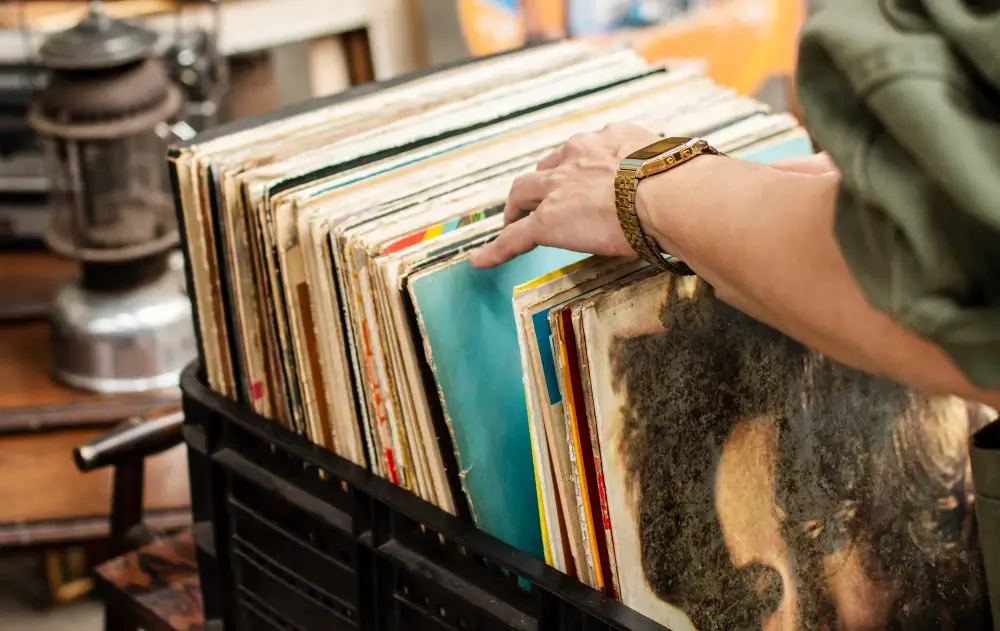
Table of contents
- Why vinyl records need special storage care
- What can damage vinyl records in storage?
- The ideal temperature and humidity for storing vinyl records
- How to store vinyl records in a storage unit
- Can you store vinyl records in a garage or loft
- Signs your vinyl records have been damaged in storage
- Frequently asked questions
Why Vinyl Records Need Special Storage Care
Vinyl is made from PVC, which softens under heat and reacts to environmental changes. Unlike books or clothes, records can permanently deform if stored incorrectly.
The two biggest enemies of vinyl are:
-
Heat
-
Humidity
Even slight warping can affect playback quality. Once a record warps badly, it cannot truly be restored.
If you’re placing records into storage — especially for months or years — the environment matters more than most people realise.
What Can Damage Vinyl Records in Storage?
Understanding the risks helps you prevent them.
Heat and Temperature Fluctuations
Vinyl begins to soften at relatively low temperatures. Lofts, garages and non-insulated storage spaces can easily exceed safe levels during summer. Records stored in hot environments may warp permanently.
The solution:
Choose a temperature-stable storage facility, ideally climate-controlled. Avoid lofts and metal storage containers exposed to direct sun.
High Humidity and Moisture
Moisture doesn’t just affect the vinyl — it destroys sleeves, encourages mould, and causes odours. Damp sleeves can stick to records, causing surface damage.
The solution:
Keep humidity stable (around 45–50%) and store records off the floor to avoid exposure to ground moisture.
Incorrect Positioning (Stacking Flat)
This is one of the most common mistakes. Stacking records flat puts pressure on the bottom discs, leading to warping over time.
We recommend always storing records vertically, like books on a shelf, with even support.
Overpacking Boxes
Trying to squeeze too many records into one box causes pressure along the edges.
The issue:
Tight compression can bend sleeves and slightly distort vinyl.
The solution:
Use appropriately sized removal boxes or plastic containers and avoid cramming. Records should stand upright with gentle support, not forced tightly together.
Poor Air Circulation
Completely sealing records in plastic containers without airflow can trap moisture. Condensation builds up and damages sleeves.
The solution:
Use breathable cardboard record boxes and store in a dry, ventilated unit.
The Ideal Temperature and Humidity for Storing Vinyl Records
From experience, the safest range for vinyl storage is:
-
Temperature: 16–21°C
-
Humidity: 45–50%
Sudden fluctuations are often worse than steady mild conditions.
Garages and sheds often experience:
-
Winter cold
-
Summer heat spikes
-
Damp ground-level air
For valuable collections, climate-controlled storage is significantly safer, particularly for long-term storage.
How to Store Vinyl Records in a Storage Unit
Once packed correctly, placement inside the unit matters.
- Choose Climate-Controlled Storage – For valuable collections, this is the safest option. Stable temperature prevents warping and humidity damage.
- Keep Boxes Off the Floor – Use pallets or shelving to prevent moisture transfer from concrete floors.
- Avoid External Walls – External walls fluctuate more with outdoor temperatures. Position boxes toward the centre of the unit where possible.
- Leave Space for Air Circulation – Do not pack the unit tightly wall-to-wall. Allow some airflow to reduce the risk of condensation.
Can You Store Vinyl Records in a Garage or Loft?
We strongly advise caution.
Garages often:
-
Become damp in winter
-
Overheat in summer
-
Have poor insulation
Lofts can reach extreme temperatures during warm months.
If records are sentimental or valuable, professional storage is a safer long-term solution.
Check also: How to store kitchen appliances?
Signs Your Vinyl Records Have Been Damaged in Storage
Look out for:
-
Visible warping
-
Sleeves showing mould or damp patches
-
Records sticking inside sleeves
-
Increased crackling or surface noise
-
Musty smells
Once mould sets into sleeves, recovery becomes difficult.
Frequently Asked Questions
Can vinyl records melt in storage units?
Vinyl doesn’t typically “melt” at room temperature, but prolonged exposure to high heat can soften and warp it. Metal containers or poorly ventilated units can become dangerously hot during summer.
Is it safe to wrap vinyl records in bubble wrap?
Bubble wrap should not be placed directly against records. It can trap heat and moisture. Use proper sleeves and sturdy boxes instead.
Should records be removed from their sleeves for storage?
No. Records should remain in protective inner sleeves and outer covers. Removing them increases risk of scratches and dust damage.
How long can vinyl records last in storage?
If stored properly in stable conditions, vinyl records can last decades without deterioration. Poor conditions, however, can cause damage within months. Hiring a long-term storage facility with controlled temperature is also very important.
Are storage containers safe for record collections?
Standard containers can be risky due to temperature fluctuations. Climate-controlled storage is much safer for preserving sound quality and sleeve condition.
Can mould damage vinyl permanently?
Mould mainly affects sleeves but can contaminate vinyl surfaces. Severe mould exposure can permanently affect condition and value.
Need help storing kitchen appliances safely? We offer professional collection, careful packing, and secure short- and long-term storage solutions.
Get in touch for a free, no-obligation quote.
Email: office@movivanremovals.co.uk
Tel: 020800 33260