Moving House With A Dog Tips
by Movivan | Jan 15, 2024 | Updated Dec 30, 2025
Moving house is stressful enough for people — but for dogs, it can be genuinely overwhelming. Loud noises, unfamiliar smells, strangers coming in and out, and a sudden change of environment can all cause anxiety and confusion.
As an experienced removal company, we’ve helped hundreds of families move house with dogs, from small flats to large family homes and long-distance relocations. The good news is that with the right preparation and a calm, structured approach, moving with a dog can be far less stressful than many owners expect.
This guide shares professional, real-world advice to help you protect your dog’s wellbeing before, during, and after moving day.
Quick Overview
If you want a quick overview, these are the most important points:
-
Keep your dog’s routine as normal as possible
-
Avoid exposing your dog to moving-day chaos
-
Prepare a safe, quiet space or use a pet sitter
-
Never transport dogs in a removals van
-
Introduce the new home gradually
-
Choose a dog-friendly removal company
Below, we’ll explain why each of these matters and how to handle them properly.
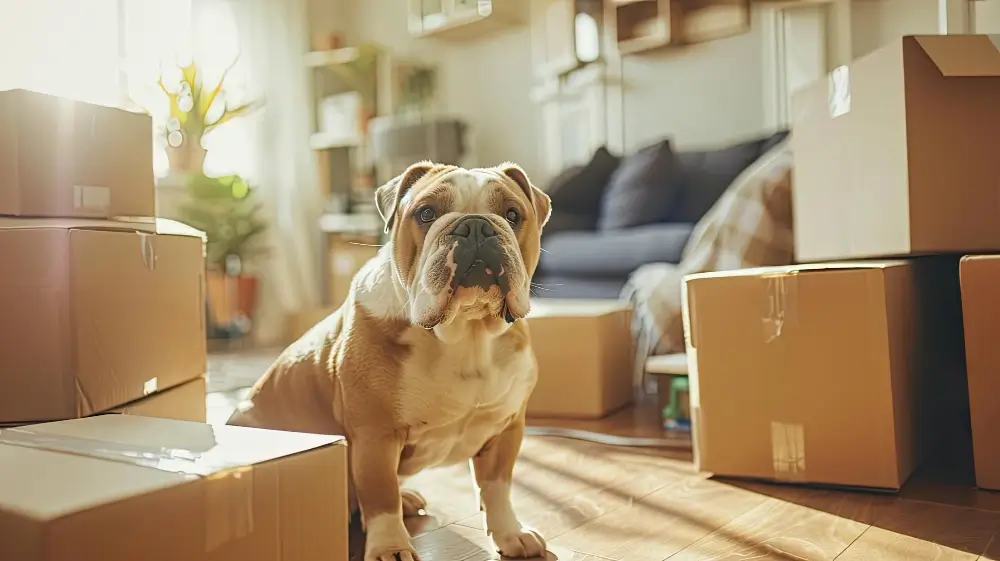
Why Moving House Is Stressful for Dogs
Dogs rely heavily on routine, scent, and familiar environments. When you move house, all three are disrupted at once.
From our experience, dogs become anxious due to:
-
unfamiliar noises (boxes, furniture, vans, tools)
-
new smells replacing familiar ones
-
strangers entering and leaving the home
-
sensing stress from their owners
-
loss of predictable routines
Professional insight:
In our experience, many dogs don’t show stress on moving day itself. Behaviour changes often appear 24–72 hours later, once the adrenaline wears off. This delayed response is completely normal and usually temporary.
Check also: Moving Home Checklist
Preparing Early When Moving House With a Dog
Early preparation is one of the most effective ways to reduce stress.
Start packing gradually
Avoid packing everything at once. Sudden changes in the home environment can confuse dogs. Gradual packing allows them to adjust without panic. You can also request a full or partial packing services to save time and stress for the whole family.
Keep familiar items accessible
Your dog’s bed, toys, blankets, and bowls should be packed last. These familiar scents act as comfort anchors during a period of change.
Maintain routines
Try to keep feeding times, walks, and play sessions as consistent as possible. Routine gives dogs a sense of control.
Expert tip
In our experience, dogs cope better when owners stay calm and predictable. Dogs often mirror their owner’s emotional state.
Keeping Your Dog Calm on Moving Day
Moving day is usually the most stressful point for dogs. In family homes, dogs often become overstimulated by children’s excitement on moving day, making calm separation even more important.
From a mover’s perspective, the biggest risks are:
-
doors constantly opening
-
loud noises and unfamiliar people
-
dogs escaping during loading
Best options on moving day:
-
Pet sitter or trusted friend: Ideal for nervous or reactive dogs
-
Quiet room: If staying home, set up a calm room with familiar items and restrict access
Never allow your dog to roam freely while movers are working. Even calm dogs can bolt when overwhelmed.
Mover insight
Movers opening doors repeatedly is the most common cause of dogs escaping during a house move — even well-trained dogs can panic in unfamiliar situations.
Should You Use a Pet Sitter
In many cases, yes — especially if:
-
your dog is anxious or reactive
-
moving from a busy household
-
you have children to manage as well
A pet sitter removes your dog from the chaos entirely and allows you to focus on the move. Even confident dogs often cope better away from the activity.
For calmer dogs, a secure room at home can work, but supervision is still important.
Check also: Moving Home With a Cat
Moving Long-Distance With a Dog
Long-distance moves require additional planning.
Professional advice:
-
Plan regular comfort breaks
-
Ensure access to water
-
Avoid feeding immediately before travel
-
Monitor behaviour closely during the journey
Dogs should always travel with their owners, never in a removals vehicle. Vans are not temperature-controlled or suitable for animals.
Expert tip
After long journeys, dogs often need quiet decompression time before exploring the new home. We also advise avoiding full meals immediately before travel, as stress can upset digestion. Light feeding after arrival often works better.
Check also: Moving home with children guide
Helping Your Dog Settle Into the New Home
Once you arrive, resist the urge to let your dog explore everything at once.
Best approach:
-
Introduce one room at a time
-
Set up a familiar “safe space” first
-
Keep routines consistent from day one
-
Avoid visitors initially
If you have a garden, supervise outdoor exploration and ensure fencing is secure.
A simple technique we often recommend is placing unwashed bedding or blankets from your old home in the new space, helping transfer familiar scents and speed up adjustment.
Why Choosing a Dog-Friendly Removal Company Matters
From experience, we know that efficient, calm removals reduce stress for everyone — including pets.
A professional, organised move means:
-
less noise and confusion
-
fewer delays
-
controlled access points
-
predictable timelines
Experienced house movers like Movivan understand the importance of working efficiently and respecting household routines, especially in homes with pets and children.
FAQs
Where should my dog stay while the movers are loading the van?
From our experience, the safest option is always away from the property — with a pet sitter, family member, or friend. When this isn’t possible, we advise setting up a secure, quiet room with the door closed and clearly marked. Most near-misses we see happen when doors are opened repeatedly during loading and dogs slip out unnoticed.
Where should my dog stay while the movers are loading the van?
From our experience, the safest option is always away from the property — with a pet sitter, family member, or friend. When this isn’t possible, we advise setting up a secure, quiet room with the door closed and clearly marked. Most near-misses we see happen when doors are opened repeatedly during loading and dogs slip out unnoticed.
Do I need to tell the removals company that I have a dog?
Yes — and earlier is always better. Knowing there is a dog in the property allows us to plan loading routes, door control, and timing more carefully. It also helps us brief the crew in advance so everyone is aware and alert on the day.
Is it better for my dog to arrive before or after the furniture?
In most cases, dogs settle better when they arrive after the main furniture is in place. A familiar bed, sofa, or crate gives them immediate comfort. Arriving too early, while the home is empty and noisy, can increase anxiety.
What’s the biggest mistake dog owners make on moving day?
The most common mistake we see is underestimating how overwhelming moving day is for dogs. Even calm, well-trained dogs can panic due to noise, strangers, and constant movement. Owners often assume their dog will “be fine” — but separation or containment planning makes a huge difference.
Should I let my dog explore the new home straight away?
We recommend introducing the new home gradually. Start with one quiet room and familiar items before allowing full access. Dogs that are overwhelmed with too much space too quickly often take longer to settle.
Need a Dog-Friendly Removal Company?
Movivan Removals regularly helps families move house with dogs, ensuring the process is calm, organised, and efficient.
We understand the challenges pets face during a move and structure our work to minimise stress for both owners and animals.
Get a free, no-obligation moving quote
📦 Organised house moves • 🚚 Professional transport • 🛡️ Fully insured