Important Things to Measure When Moving Home
One of the most overlooked aspects of home moving is proper measurement. Taking accurate measurements of doorways, hallways, furniture, and your new property prevents costly surprises on moving day. This comprehensive guide explains what to measure when moving and how to avoid expensive mistakes like wardrobes that don't fit or sofas that won't turn corners.
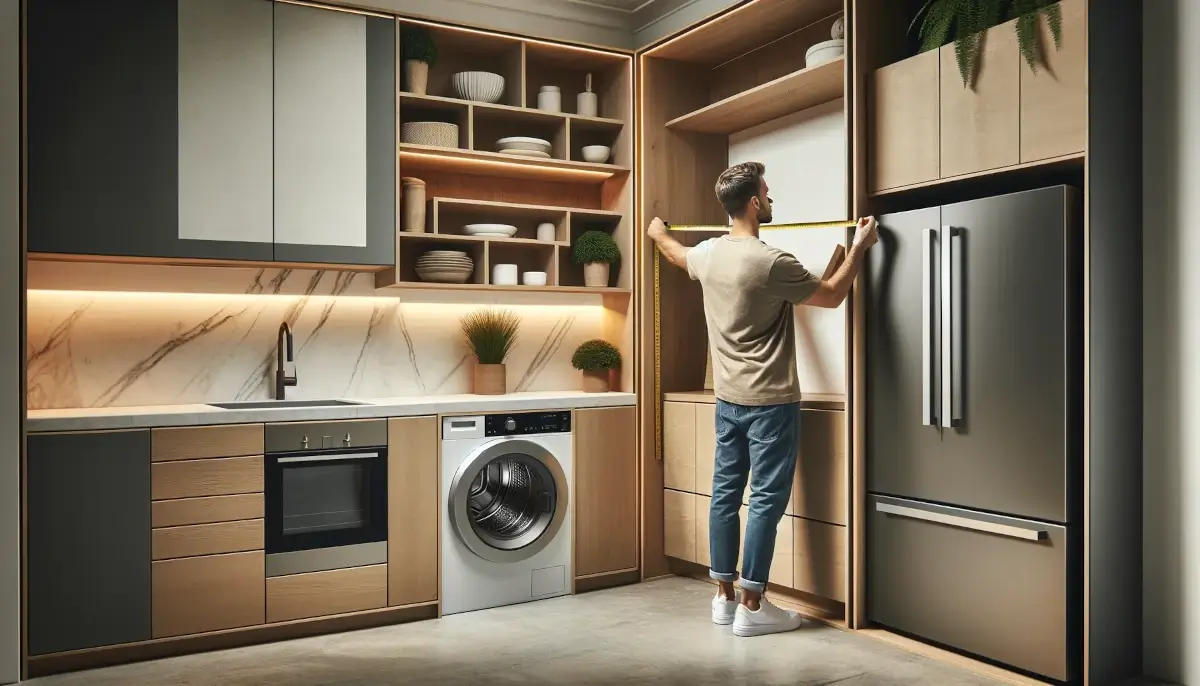
Key Takeaways
- Measure furniture dimensions: Height, width, and depth of all large items before moving
- Check property access points: Doorways, hallways, staircases, and windows must accommodate furniture
- Lift and staircase measurements are critical: For flat dwellers, understanding access constraints prevents relocation disasters
- Test corners and passages: Large sofas and wardrobes may need disassembly if they can't navigate tight corners
- Appliance measurements matter: Refrigerators, ovens, and washing machines must fit in designated spaces
- Plan for contingencies: Knowing measurements allows you to arrange disassembly or disposal services in advance and optimizing your house moving costs.
Table of Contents
- Measuring Lift Access (For Flat Dwellers)
- Measuring Staircases
- Measuring Windows and Exits
- Measuring Main Entrances
- Measuring Wardrobes and Built-ins
- Measuring Large Appliances
- Measuring Sheds and Garden Structures
- Measuring Sofas and Large Furniture
- Measuring Outdoor Furniture
- Measuring Rugs and Carpets
- Frequently Asked Questions
Measuring Lift Access: Critical for Flat Dwellers
If you're moving to a flat with a lift, measuring lift dimensions is absolutely essential. Many moving jobs become impossible when bulky furniture cannot fit through lift doors, forcing last-minute changes and additional costs.
Key Lift Measurements to Record
- Door width: The critical measurement determining if furniture passes through
- Door height: Many tall wardrobes fail to fit in lifts due to insufficient height
- Interior dimensions: Length and width of the lift interior (diagonal measurement often matters more than door width)
- Weight restriction: Always check the lift weight limit—movers cannot use an overloaded lift
Measuring Distance for Cost Estimation
To provide accurate moving costs, professional removers also need:
- Distance from flat door to lift: Walking distance increases labour time
- Distance from lift to loading area: Underground parking vs. street-level loading impacts cost
- Underground parking height restrictions: Many flats have basement parking with 2.1m height limits, preventing larger vans from loading
If your building has basement parking with height restrictions and your street has no parking, movers must park further away—significantly increasing costs and moving duration.
💡 Pro Tip: Take photos of your lift dimensions and a short video showing diagonal angles. This visual record helps moving companies plan the move more accurately and identify potential issues in advance.
Measuring Staircases: Preventing Furniture Damage
Before moving large furniture upstairs, staircase measurements are critical. Tight staircases cause more moving day problems than any other single issue.
Essential Staircase Measurements
- Width at the narrowest point: This is your true constraint, not the average width
- Vertical clearance: Height from stair treads to ceiling or overhead obstacles
- Angle of the staircase: Steep or curved staircases present special challenges
- Landing dimensions: How much space exists to maneuver furniture around corners
Testing Large Items
Before moving day:
- Test whether sofas can navigate the staircase by attempting a diagonal (longest dimension) measurement
- Identify if furniture must be disassembled to fit through tight sections
- Check if any stairs, railings, or overhead pipes create additional constraints
Discovering these problems during the move—rather than beforehand—creates stress, delays, and potential damage to both furniture and property.
Measuring Windows and Exit Points
Window measurements matter for several practical reasons:
Why Window Dimensions Matter
- Alternative access: If doorways are impossible, windows sometimes provide alternative routes for large furniture
- Damage prevention: Understanding window height, width, and frame depth prevents accidental breakage
- Space planning: Window locations affect where furniture can be positioned in your new rooms
- Light and layout: Window placement influences furniture arrangement and room organization
In some London properties with severe access restrictions, moving heavy furniture through windows using professional equipment has been the only viable solution.
Measuring Main Entrances: The Foundation of Moving Day
Entrance measurements are your foundation for successful moves. Before movers arrive, record all relevant dimensions.
Entrance Measurements to Record
- Main door width and height: Standard doors are 30-36 inches wide, but some are narrower
- Hallway width: Hallways often narrow, constraining furniture passage
- Distance from front door to loading area: Affects labour time and cost
- Threshold height: Some properties have raised thresholds requiring additional care
Notifying Movers in Advance
Share these measurements with your moving company immediately:
- Whether doors can be removed from hinges for extra clearance
- If large furniture requires disassembly or partial disassembly
- Any stairs, steps, or level changes at entry points
Providing this information early allows professional movers to plan properly and schedule additional services if needed—like furniture disassembly or reassembly.
Measuring Wardrobes and Built-in Furniture
One of the most common moving day problems involves tall wardrobes that don't fit in new properties. Low ceilings in older UK homes frequently prevent even disassembled wardrobes from fitting, making advance measurement absolutely critical.
Critical Wardrobe Measurements
- Total height (when assembled): Many Victorian homes have 7-8 foot ceilings
- Width with doors fully open: Required for maneuvering through doorways
- Depth (front to back): Affects passage through tight hallways
- Disassembled dimensions: Even individual panels may be too long for tight hallways
Wardrobe Reassembly Challenges
Most common moving day problem: Customers move tall wardrobes to new properties only to discover they exceed ceiling height and cannot be reassembled. This results in:
- Last-minute furniture removal and disposal costs
- Significant additional moving expenses
- Wasted time and moving day stress
We strongly recommend measuring ceiling height in your new property before the move. If wardrobes won't fit, you have time to arrange disposal or purchase new furniture.
Built-in Furniture Considerations
- Measure fitted wardrobes to determine if they can be removed without damage
- Fitted wardrobes are often custom-built and may not fit in different dimensions
- Assess whether it's worth transporting or if replacement is more cost-effective
Measuring Large Appliances: Kitchen and Laundry
Large appliances present special moving challenges. Measuring appliance dimensions before purchasing or moving is essential to ensure they fit in your new kitchen or laundry space.
Refrigerator and Freezer Measurements
- Width: American-style fridge freezers are significantly wider than standard models
- Height: Some models exceed counter height, affecting design and access
- Door clearance: Wide American models may need doors removed to pass through door frames
Important: American-style fridge freezers often require door removal to exit the old property and enter the new one. This significantly increases moving costs if not planned in advance.
Other Appliance Measurements
- Ovens: Built-in models have specific dimension requirements
- Washing machines and dryers: Stacking dimensions affect laundry room layout
- Dishwashers: Standard sizes but may not fit under low countertops
- Microwaves: Over-range models require specific clearance measurements
Always measure the intended space in your new property and the appliance itself. If dimensions don't match, you'll need to purchase new appliances or modify your kitchen layout.
Measuring Sheds and Garden Structures
If you're relocating a shed, shed measurements determine whether the move is even possible. Sheds are challenging to transport, and many cannot be moved due to access restrictions.
Critical Shed Measurements
- Width and height: Must fit through gates, passages, and property exits
- Length: Longer sheds often cannot navigate tight corners
- Roof height: Includes overhanging eaves that may catch on obstacles
Access Route Assessment
Measure the entire route from the current shed location to the exit point:
- Gateway widths and heights
- Narrow passages or alleyways
- Fences or obstacles that must be removed or worked around
Many sheds cannot be safely moved due to structural condition or access impossibility. In these cases, professional removal and disposal is more cost-effective than attempting to relocate a fragile structure.
Measuring Sofas and Large Furniture: The Critical Angle
Sofas create more moving day problems than any other furniture type. Sofa measurements must consider not just doorway width, but the diagonal measurement when rotated through tight corners.
Essential Sofa Measurements
- Length (longest dimension): Measured in a straight line from arm to arm
- Height to tallest point: Including cushions and backs
- Depth (front to back): Crucial for narrow hallways
- Arm dimensions: Removable arms expand access possibilities
The Diagonal Measurement Test
Before moving day, test whether your sofa can navigate corners using the diagonal measurement approach:
- Measure the hallway width and height at the narrowest point
- Calculate the diagonal (use the Pythagorean theorem or a calculator)
- Compare to your sofa's length—it must be shorter than the diagonal
If the sofa won't fit, you have options: removing arms (if possible), disassembly, or arranging alternative placement routes through windows or other entry points.
⚠️ Moving Day Reality: We regularly encounter sofas that seemed fine at the old property but cannot navigate corners in new homes. Having this information before movers arrive prevents stress and expensive last-minute decisions.
Measuring Outdoor Furniture: Space Planning for Patios
Outdoor furniture measurements help you plan patio layout and ensure pieces fit comfortably in your new garden space.
Outdoor Items to Measure
- Patio tables: Length, width, height for dining area space planning
- Chairs: Width, depth, height for seating arrangement
- Umbrellas: Diameter when open for shade coverage assessment
- Lounge chairs: Length and width for sunbathing area space
- Outdoor sofas and loveseats: Dimensions for patio layout
- Coffee tables and side tables: Measurements for conversation area setup
- Hammocks: Length and width for comfortable hang space
- Grills and barbecues: Width, depth, and height for cooking area placement
- Planters and pots: Diameter and height for garden design
- Outdoor storage containers: Dimensions for accessible storage placement
With accurate outdoor furniture measurements, you can plan your new patio layout before moving day, ensuring everything fits comfortably without overcrowding the space.
Measuring Rugs and Carpets: Fitting to Room Dimensions
Rug measurements determine whether your existing rugs work in new rooms or if you need to purchase new ones.
Rug Measurement Essentials
- Length and width: Measured in straight lines for rectangular rugs
- Shape: Non-rectangular rugs require special consideration for room placement
- Room dimensions: Measure new room length, width, and furniture placement
- Doorway and furniture clearance: Rugs should not obstruct traffic flow or door swings
Rug Decision-Making
With both rug and room measurements, you can decide:
- Whether to keep your existing rug
- If it needs repositioning for different room dimensions
- Whether new rugs or carpeting would be more suitable
Many people discover their existing rugs don't complement new room sizes or layouts. Knowing this in advance allows you to plan accordingly.
Frequently Asked Questions About Moving Measurements
Use a measuring tape to find the straight-line distance from the farthest corners of your furniture when positioned diagonally. For precise calculation, measure hallway width and height, then use the Pythagorean theorem: diagonal = √(width² + height²). If your furniture length exceeds this diagonal, it won't fit through the corner.
Most modern wardrobes cannot be shortened without compromising structure and function. If your wardrobe exceeds new ceiling height, you have three options: disassemble and store portions, donate to charity, or sell and replace. Planning this before moving day saves significant expense and stress.
Professional movers have several solutions: removing furniture feet or legs, disassembling pieces, removing doorframes temporarily, or in rare cases, using windows or other entry points. Discussing these options with your moving company before the move allows them to prepare proper equipment and allocate sufficient time.
Measure the kitchen space width, height, and depth. American fridge freezers typically range from 32-36 inches wide and 68-70 inches tall. Doors often need removal to exit the old property and enter the new one—plan for this extra expense and time during your move.
A digital measuring tape works best for awkward spaces and provides precise measurements. Smartphone measuring apps can help, but physical tape measures are more reliable. Take measurements at multiple points (top, middle, bottom) for accuracy, especially in older properties with uneven floors and walls.
Yes. Measure everything at least twice, preferably at different times of day with different people. Record measurements clearly with photos or diagrams. Share all measurements with your moving company at the time of quotation—this information is essential for accurate pricing and planning.
Planning a Move? Don't Skip Measurement!
Taking accurate measurements before moving day prevents expensive last-minute problems and eliminates moving day stress. Movivan's experienced team has seen it all—from sofas that won't fit to wardrobes that exceed ceiling heights. Let us help you plan your move with proper measurements and professional advice.
Get a Free Quote 📞 020 800 33260